
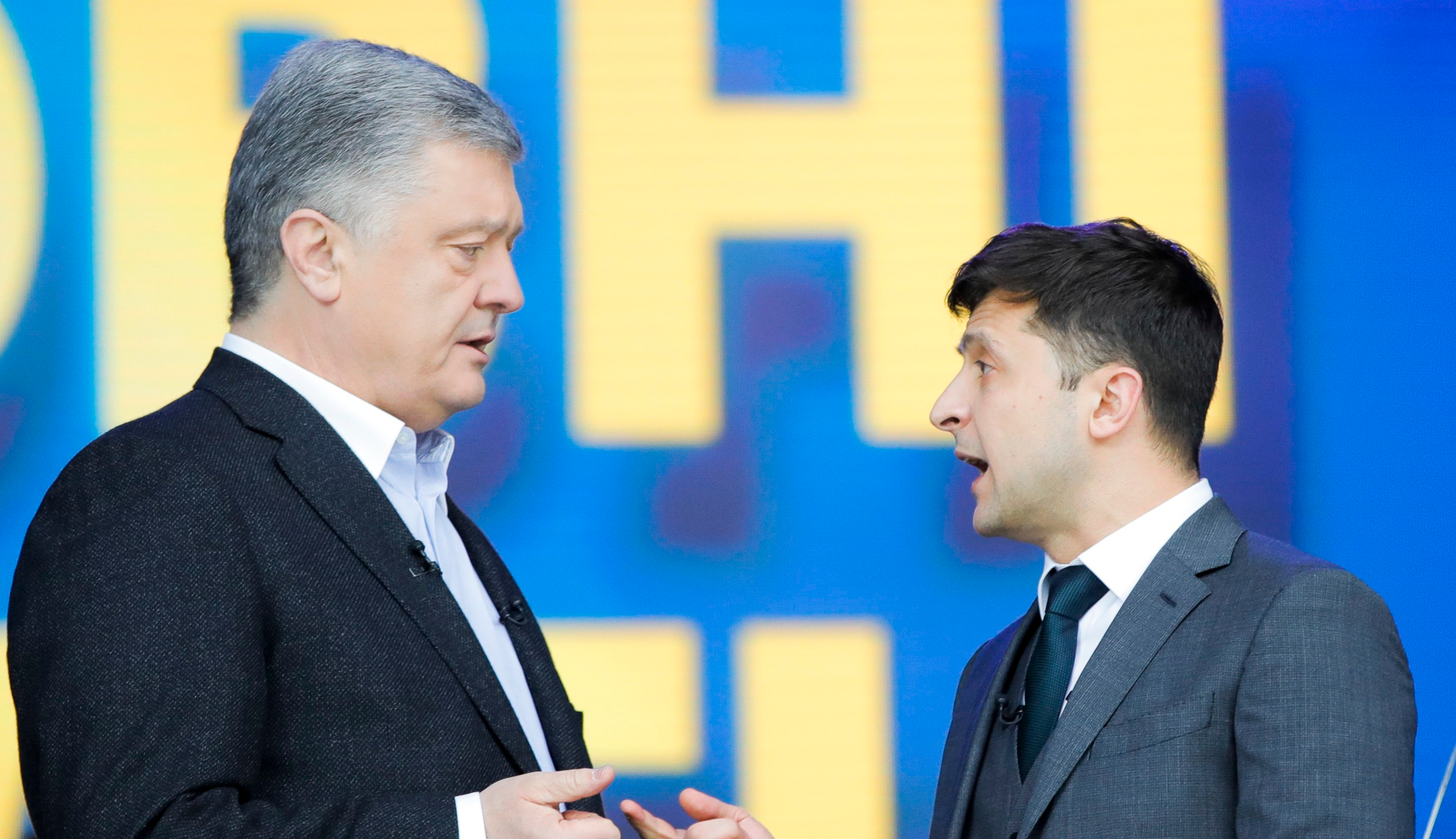
Example 1: Elections in Ukraine
On April 21, 2019, Ukrainian citizens elected a new president, Vladimir Zelensky. Before the Presidential election of 2019 in Ukraine, Mr. Zelensky used to be a comedian, actor, and screenwriter. Zelensky had a production company, called Kvartal 95, which produced a TV series called Servant of the People, where he starred as a President of the Ukraine. In 2018, the employees of Kvartal 95 created a political party under the name Servant of the People, which nominated his candidacy for presidency. Overall, his media representation was mostly positive, which helped him gain the votes.
The previous Ukrainian President, Pietro Poroshenko, however, did not have such a positive media image. Ukrainian (and foreign) media sources portrayed him as a principled politician, who made a number of wrong choices and basically separated the country (even though he did not separate Ukraine, the Crimean conflict did). However, due to his inability to resolve the conflict in a most beneficial way for Ukraine and to unite the country, his media representation leaves much to be desired. At the beginning of his term, however, Mr. Poroshenko had high approval rates due to his big plans for Ukraine, of which he managed to fulfil only a part.
Speeches make a politician. Media makes a politician. And this is only one example out of many.
On April 21, 2019, Ukrainian citizens chose a new president. Exit polls showed roughly 73% citizens voted for Zelensky. It is evident that media played a defining role in the elections in Ukraine, due to the scales of media representation and media images of the two candidates. The question now is, will Mr. Zelensky justify the trust that media placed in him, or is he another wannabe politician, who somehow managed to become President? Will the media continue the extremely positive representation of him, or will it praise Mr. Poroshenko? Will the media affect Zelensky’s approval rates?

 Media and Politics